Mixture-of-Thought-Tokens:
Unifying Perception and Reasoning for Free-form Multimodal Grounding

PR-Bench

Tianyi Gao1,2,†,◊, Han Fang2,†, Tianyi Ding2,4, Hao Li2,5, Xin Wei2, Hongbo Sun2, Xiaodong Dong2, Ye Yuan2, Jinglin Xu3, Kongming Liang4, Hao Sun2,*, Jingmin Xin1,*

1State Key Laboratory of Human-Machine Hybrid Augmented Intelligence, Institute of Artificial Intelligence and Robotics, Xi'an Jiaotong University
2Xingchen AGI Lab, China Telecom Artificial Intelligence Technology (Beijing) Co., Ltd
3University of Science and Technology Beijing    4Beijing University of Posts and Telecommunications    5Shanghai Jiao Tong University

Equal contributions.    Work done during internship at China Telecom Artificial Intelligence Technology (Beijing) Co., Ltd.    *Corresponding authors.
6,000query-box pairs
3,102source images
6mutually exclusive subcategories

Leaderboard

PR-Bench evaluates referring expression comprehension across six diagnostic subcategories, separating visual-cue perception from compositional reasoning.

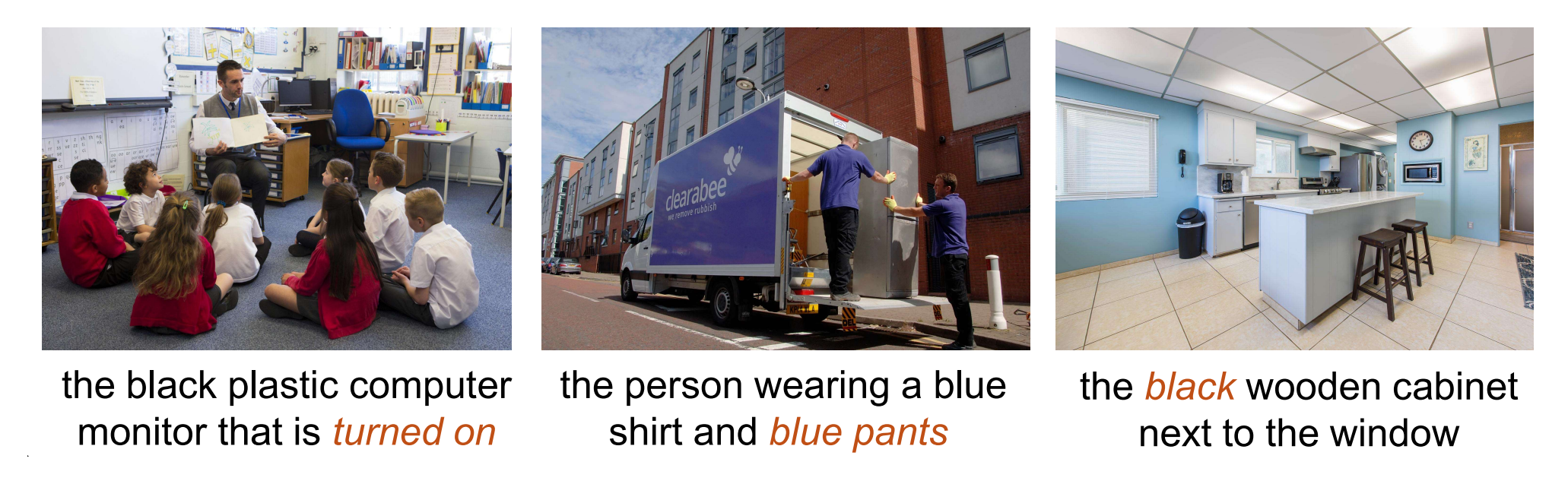
Attribute: intrinsic visual properties such as color, texture, material, shape, or state. Position: spatial placement relative to other objects in the scene. Interaction: relative ordering or arrangement among same-category objects. Relation: comparative relationships involving multiple grounded entities. Commonsense: contextual or functional descriptions without explicit object naming. Rejection: expressions whose conditions match no valid target.
Rank Model Size mAcc mAccAPI mAccRC Attr. Pos. Inter. Rel. Common. Rej.
1Qwen3.527B65.367.661.968.467.367.062.761.0--
2Qwen3.59B63.766.359.768.966.963.159.460.011.9
3Qwen3-VL8B59.462.055.664.862.658.755.855.416.2
4GLM-4.1V-Thinking9B57.961.252.963.661.558.652.453.4--
5LocateAnything3B57.461.750.863.161.460.850.051.6--
6VLM-R13B54.457.050.559.058.054.147.853.2--
7VLM-FO13B53.957.348.857.956.857.249.647.911.4
8Rex-Omni3B53.758.846.059.558.058.946.845.1--
9Youtu-VL4B53.256.747.961.557.251.449.246.6--
10Qwen3-VL2B52.855.748.259.558.050.046.749.6--
11Migician7B52.356.645.857.359.752.845.446.1--
12ChatRex7B49.553.044.354.751.153.245.143.4--
13InternVL3.538B48.551.743.752.050.852.343.943.412.7
14DeepEyes7B45.747.343.149.746.346.042.643.6--
15InternVL3.58B41.544.137.645.741.245.337.837.3--

Additional models are currently under evaluation, and more results will be added to the leaderboard soon.

Attr. = Attribute; Pos. = Position; Inter. = Interaction; Rel. = Relation; Common. = Commonsense; Rej. = Rejection. mAcc: mean over Attr., Pos., Inter., Rel., and Common., averaged across IoU thresholds from 0.5 to 0.9 (step 0.05). mAccAPI: mean over Attr., Pos., and Inter. mAccRC: mean over Rel. and Common. Rej.: no-target accuracy for rejection queries.

Abstract

Multimodal Large Language Models have made great progress in grounding tasks, yet existing methods still struggle to unify precise localization and complex reasoning. Text-based methods rely on coordinates or index prediction, limiting perceptual capabilities for dense visual objects, while latent token-based methods lack inherent spatial references and thinking steps.

To address this, we propose Mixture-of-Thought-Tokens (Motto), a new free-form multimodal grounding method that bridges the perception-reasoning gap. Spatially-Grounded Thought Tokenization explicitly aligns special tokens with spatial locations, while a Context-Adaptive Chain-of-Tokens dynamically switches grounding modes within an interleaved reasoning chain.

We also construct PR-Bench, a new referring expression comprehension benchmark for evaluating the perception-reasoning gap. Extensive experiments demonstrate that Motto achieves state-of-the-art performance across diverse free-form grounding tasks.

Benchmark Design

Visual-cue Perception

Evaluates whether a model can localize targets from directly observable visual evidence, including intrinsic object properties, spatial placement, and arrangements among objects.

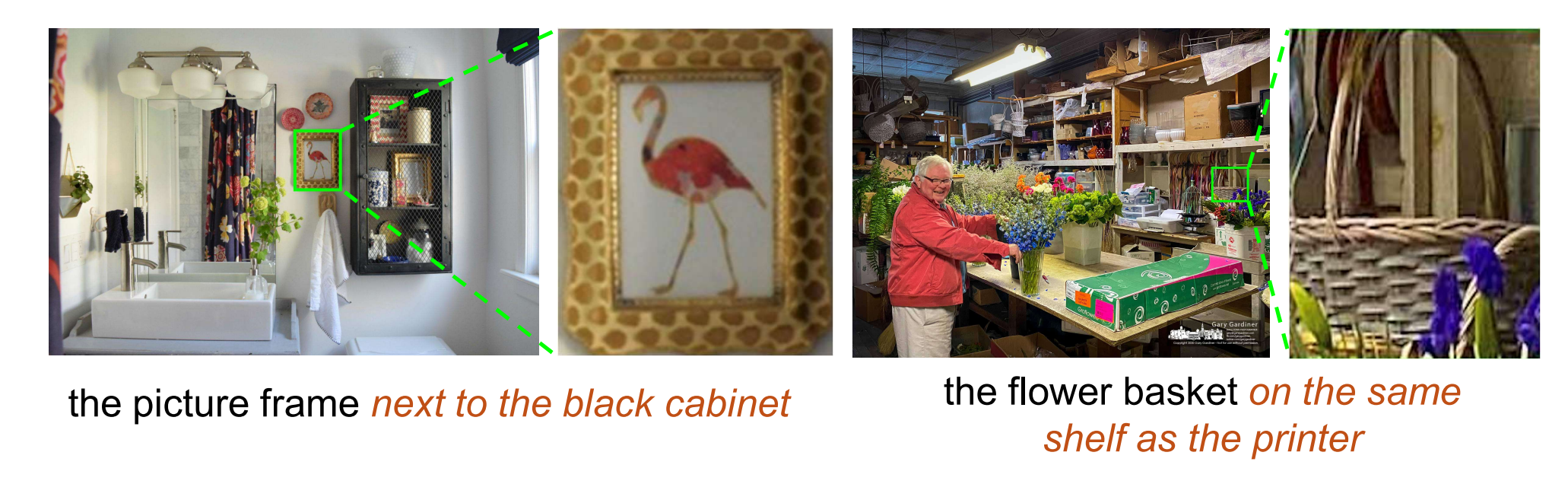
Attribute

Focuses on intrinsic and directly observable properties such as color, texture, material, shape, and state. Target identification depends on distinguishing fine-grained visual cues from same-category distractors.

Attribute examples from PR-Bench
Position

Captures spatial relationships between different objects. The target must be localized according to its relative placement with respect to heterogeneous anchor objects in the scene.

Position examples from PR-Bench
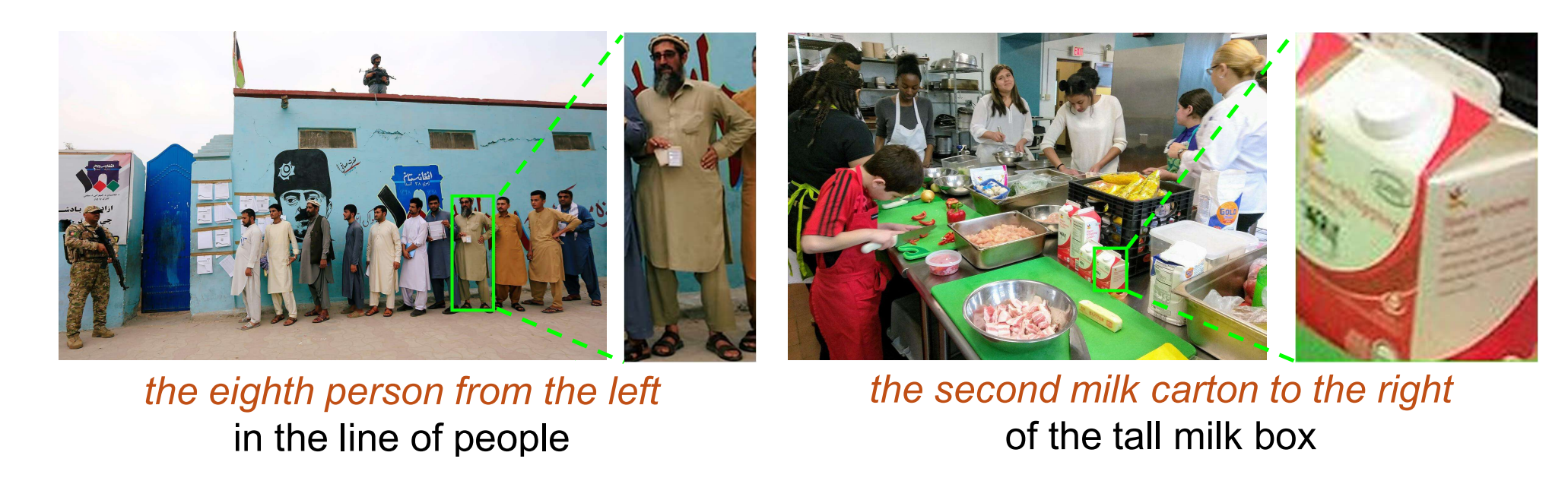
Interaction

Focuses on spatial arrangement and relative ordering among objects of the same category, typically requiring ordinal or relative positioning within a homogeneous group.

Interaction examples from PR-Bench

Compositional Reasoning

Evaluates more complex referring expressions that require multi-object comparison, contextual or functional inference, or reliable rejection when no object satisfies the query.

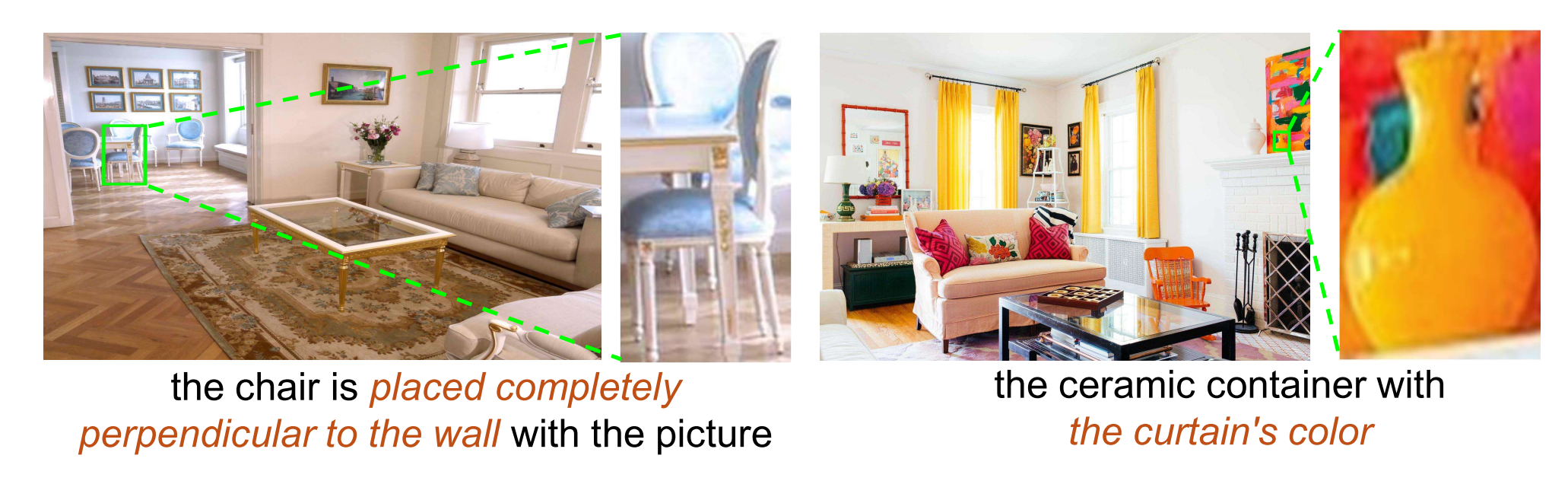
Relation

Identifies targets through comparative relationships with distinct anchor objects, using shared or contrasting visual attributes. The model must ground multiple entities before making the comparison.

Relation examples from PR-Bench
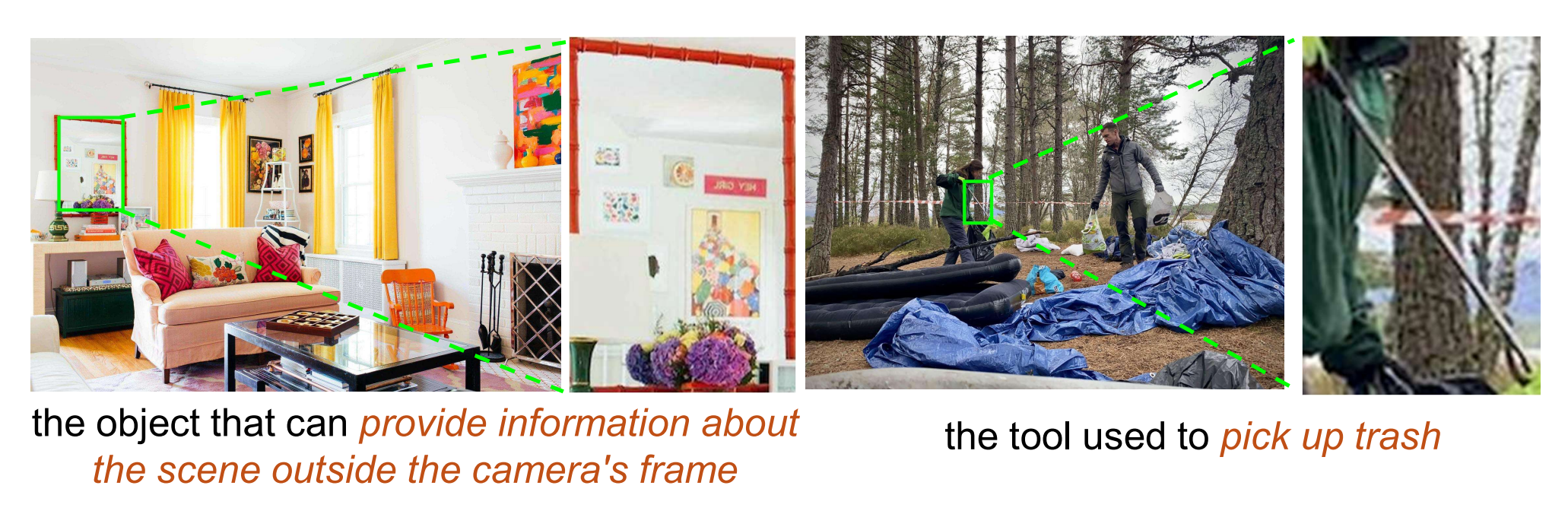
Commonsense

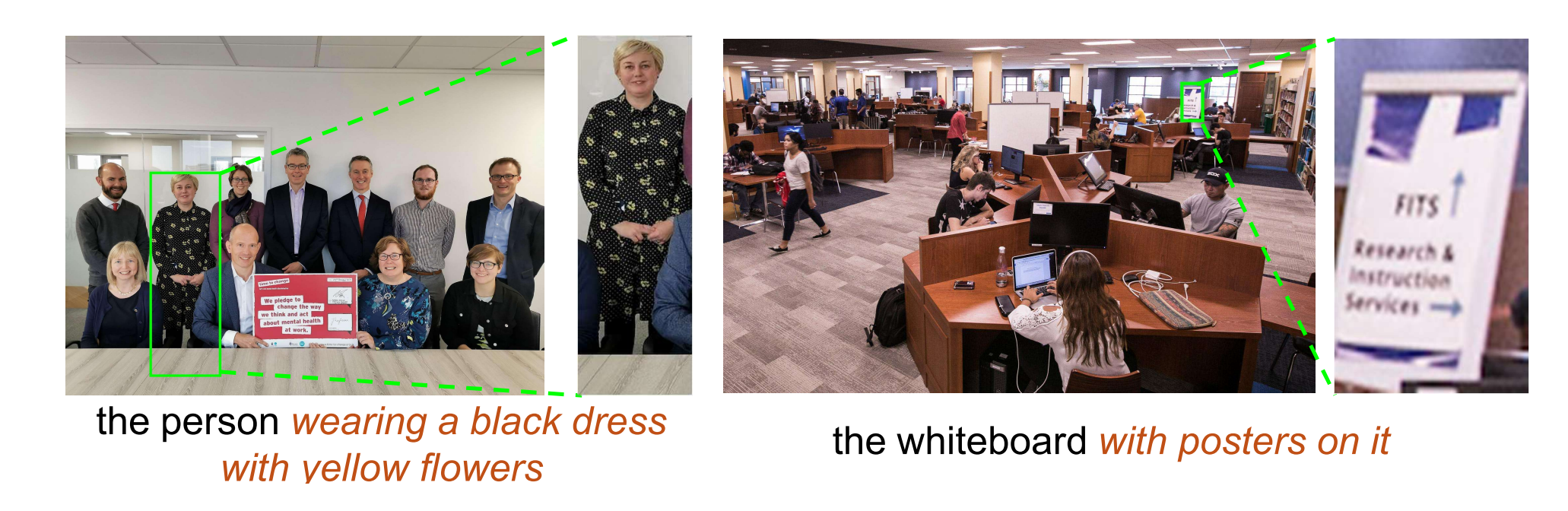
Identifies targets through contextual or functional descriptions rather than explicit visual attributes. The expression may refer to an object by its use, purpose, or scene context.

Commonsense examples from PR-Bench
Rejection

Focuses on negation and non-existent references. These expressions contain one or more conditions that do not match any object in the image, so the correct behavior is to reject the query.

Rejection examples from PR-Bench

Construction Pipeline

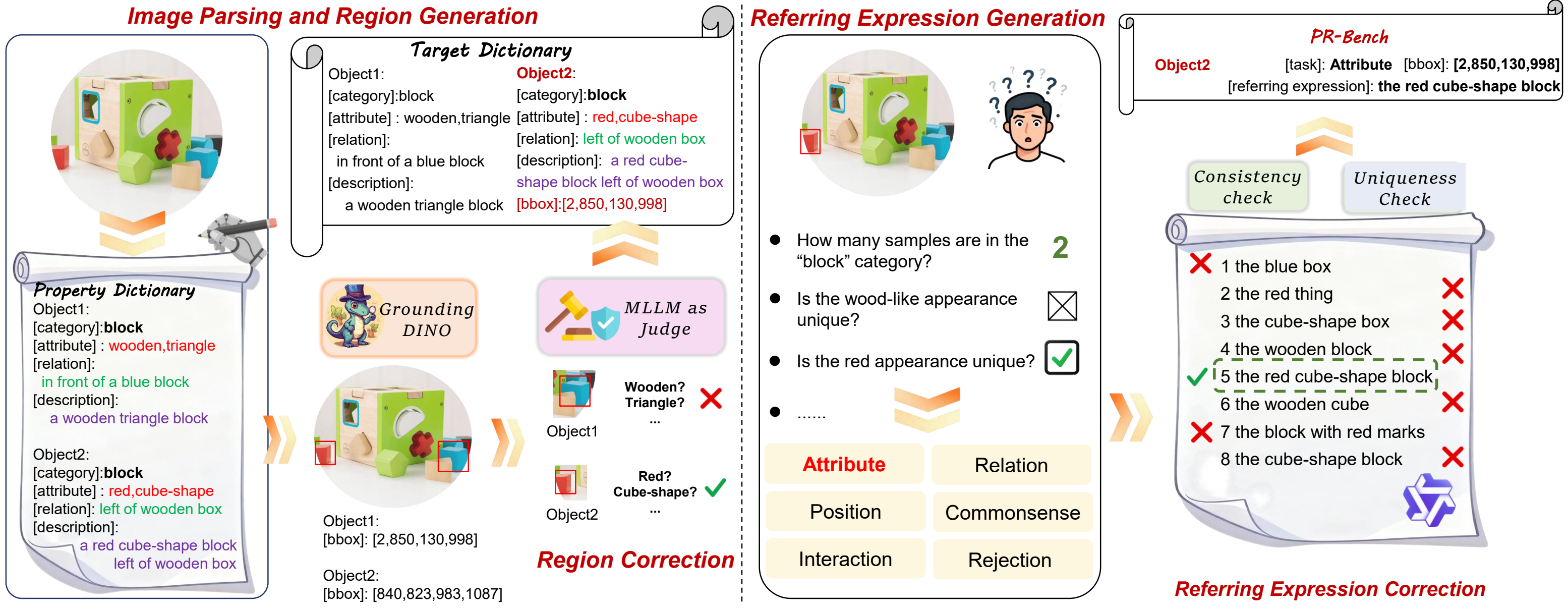
PR-Bench construction pipeline

PR-Bench is built from FineHARD images. Following the paper, images are filtered by resolution range and the distribution of Grounding DINO-detected boxes to prioritize scenes with diverse objects and rich visual content; the automated annotation pipeline is followed by multi-round expert verification.

Image parsing and region generationQwen2.5-VL-72B decomposes each image into an object-centric property dictionary, including category, inherent attributes, interactive relationships, and a description phrase. Grounding DINO then grounds the description phrases into candidate boxes.
Region correctionEach candidate region is converted into a verification checklist. Qwen2.5-VL-72B checks whether the visual content inside the target region matches all listed properties, and only fully consistent objects are retained.
Referring expression generationA human-defined rule-based selection function assigns retained objects to task types by specific visual conditions, curating challenging task-relevant seeds before Qwen2.5-VL-72B generates task-specific referring expressions.
Referring expression correctionCandidate expressions are validated through consistency and uniqueness checks, then ten expert annotators perform multi-round review to correct localization inaccuracies and refine linguistic ambiguities.

Dataset Statistics

6,000
query-box pairs
3,102
source images
1,000
phrases per subcategory
12.4
average phrase length
TypeImagesPhrasesBox SizeLength
Attribute7011,00010.76%9.3
Position7351,0008.34%11.0
Interaction6421,0009.43%10.3
Relation6951,0006.15%14.4
Commonsense7151,0006.14%15.5
Rejection7641,000N/A13.8
Total3,1026,0008.16%12.4

Analysis

1
Overall capability gap

Models drop substantially on PR-Bench: none exceeds 72% Accp, and AccRC is 6.02% lower than AccAPI on average.

2
Perceptual difficulty drivers

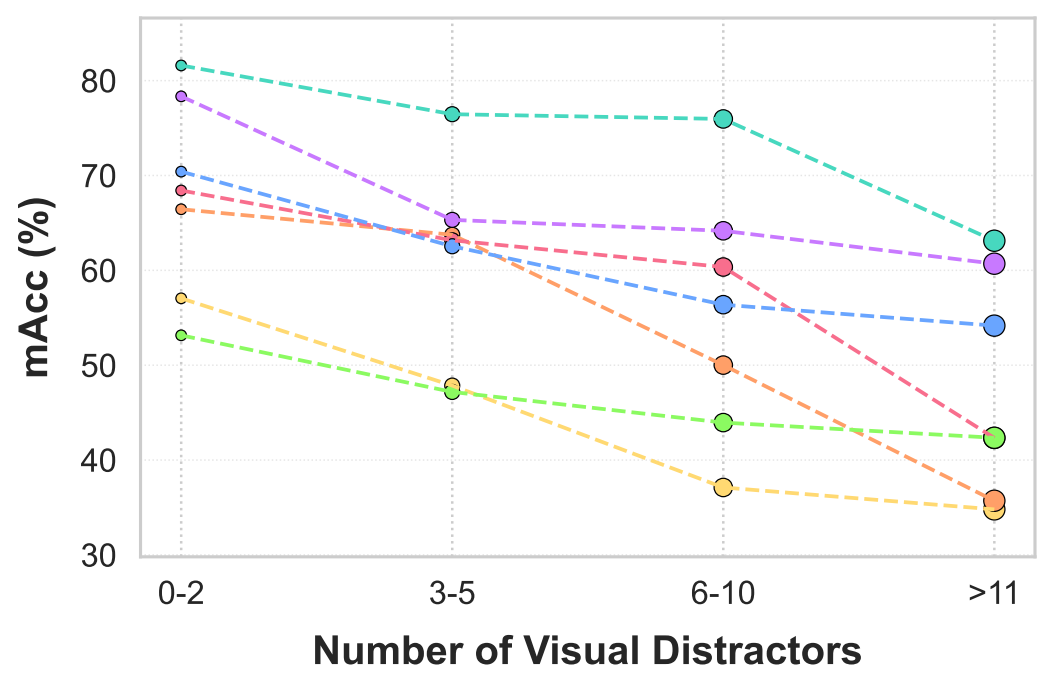
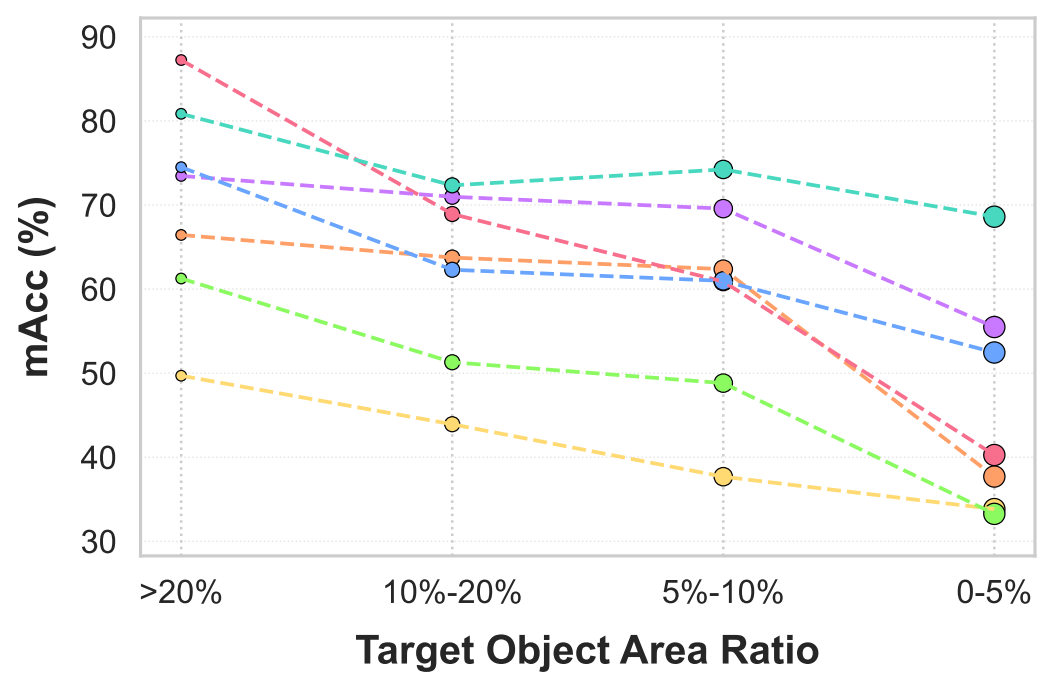
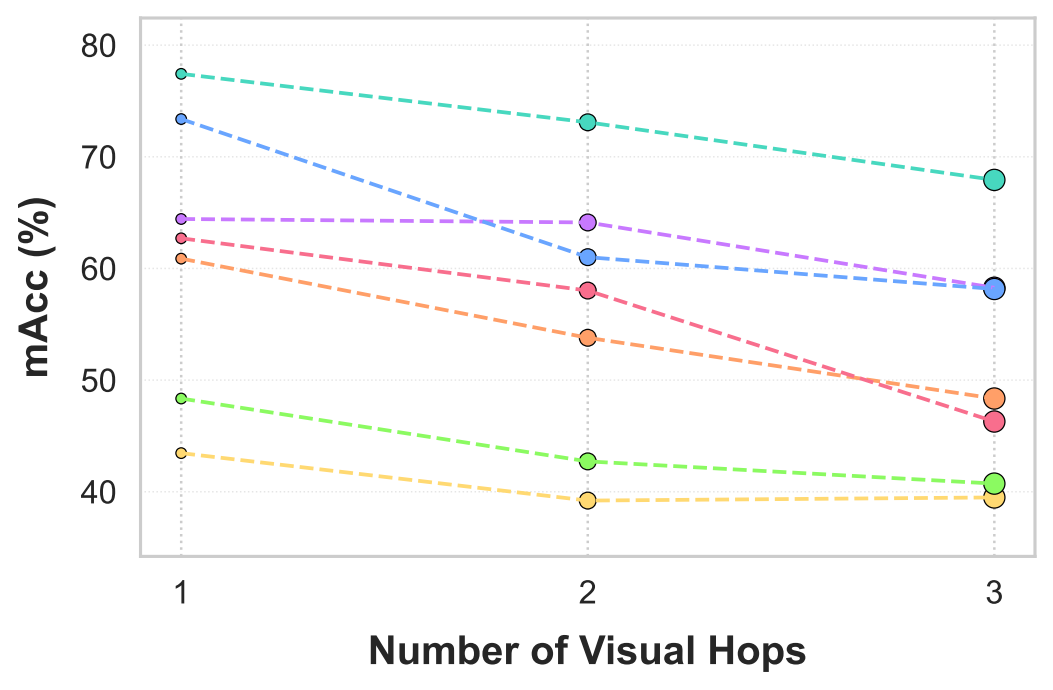
Same-category distractors, smaller target area, and longer object-hop chains reduce accuracy by 20.77%, 25.64%, and 10.88% on average.

3
Reasoning and hallucination

Thinking mode improves Relation and Commonsense, while rejection remains vulnerable to localization hallucination under dense visual references.

Benchmark Difficulty Profile

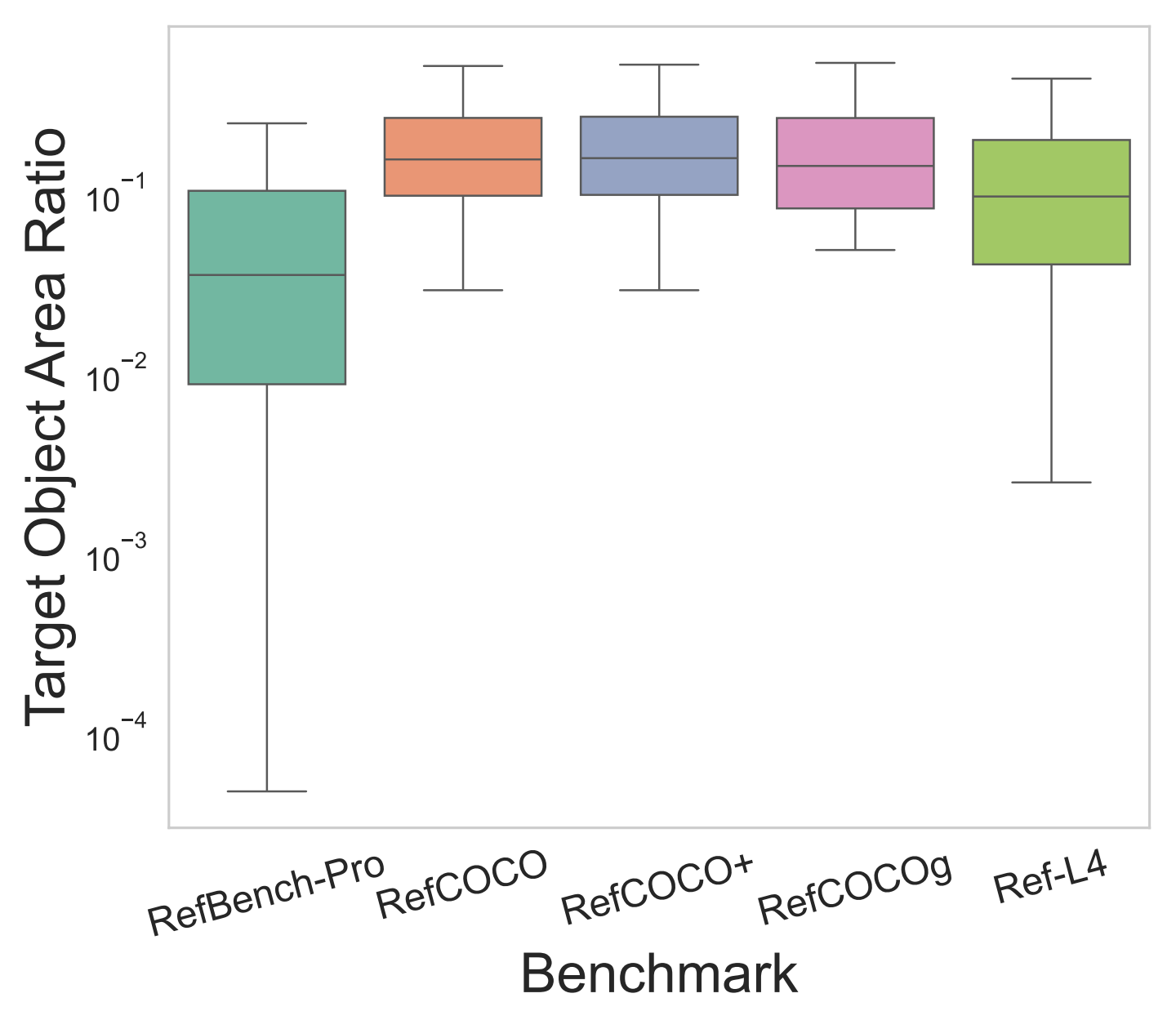
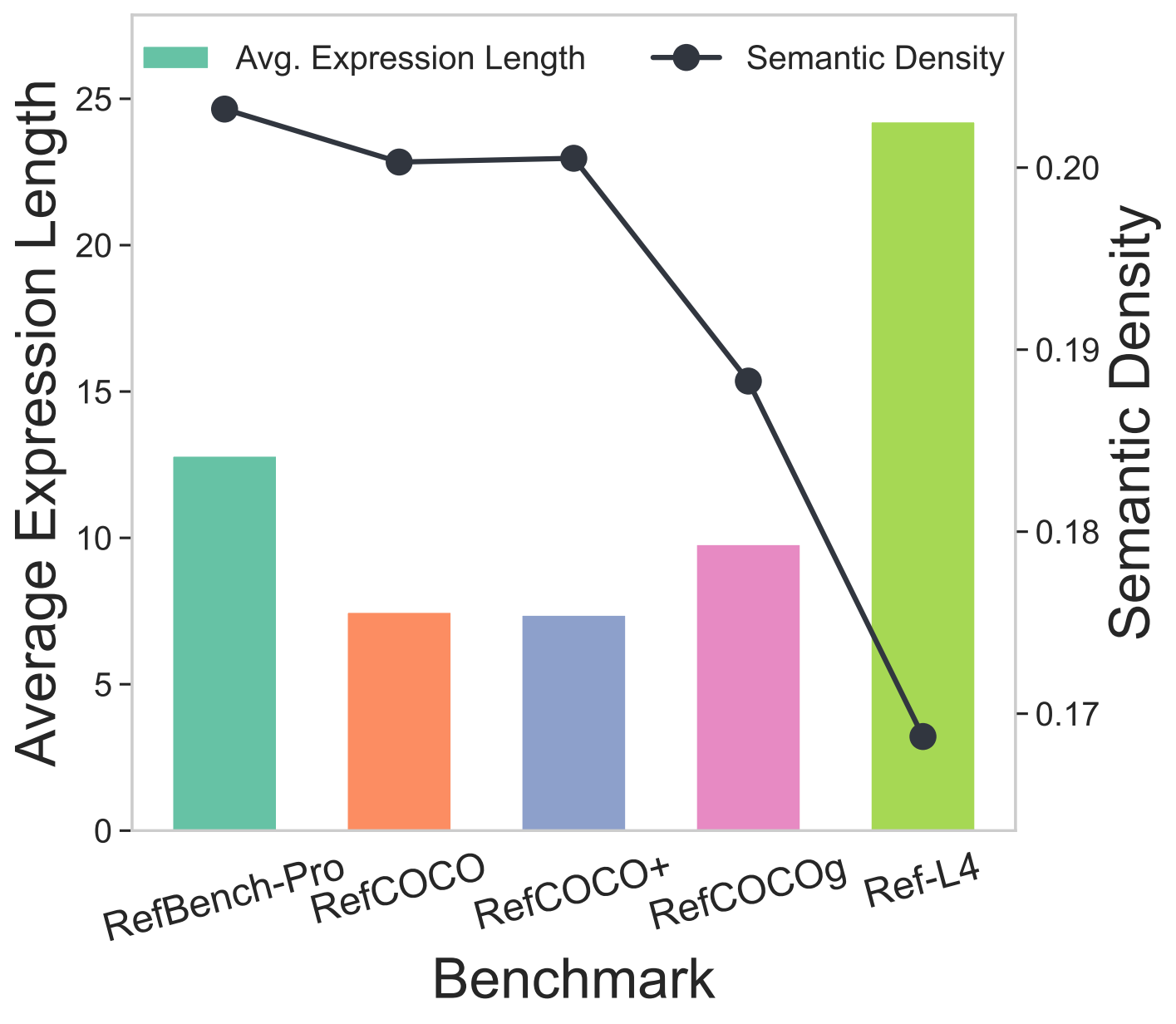
Target object area ratio comparison Expression length and semantic density comparison

PR-Bench emphasizes small or marginally visible targets and dense, discriminative visual cues. Compared with existing REC benchmarks, its long expressions are designed to carry useful grounding evidence rather than context-irrelevant description.

Perceptual-Aware Evaluation

Model legend for perceptual difficulty analysis
Accuracy by same-category distractors Accuracy by target object area ratio Accuracy by object hops

Performance decreases as scenes become visually harder: more same-category distractors, smaller boxes, and additional reference hops all degrade grounding. In the hardest bins, only Qwen3-VL-8B remains above 60% accuracy in the paper analysis.

Citation

@article{gao2026mixture,
  title={Mixture-of-Thought-Tokens: Unifying Perception and Reasoning for Free-form Multimodal Grounding},
  author={Gao, Tianyi and Fang, Han and Ding, Tianyi and Li, Hao and Wei, Xin and Sun, Hongbo and Dong, Xiaodong and Yuan, Ye and Xu, Jinglin and Liang, Kongming and Sun, Hao and Xin, Jingmin},
  journal={arXiv preprint arXiv:2607.24407},
  year={2026}
}